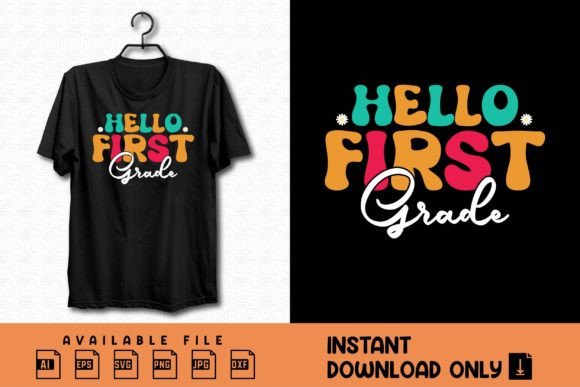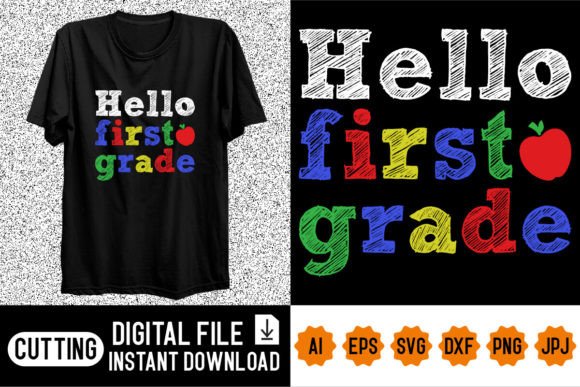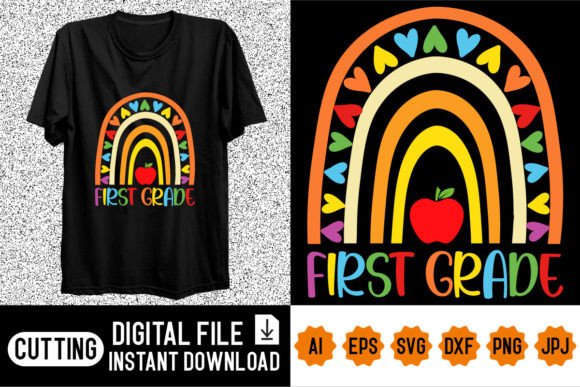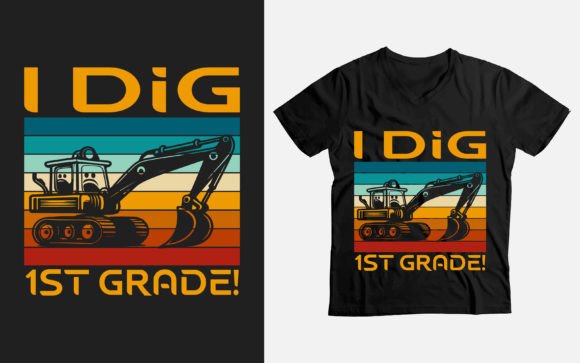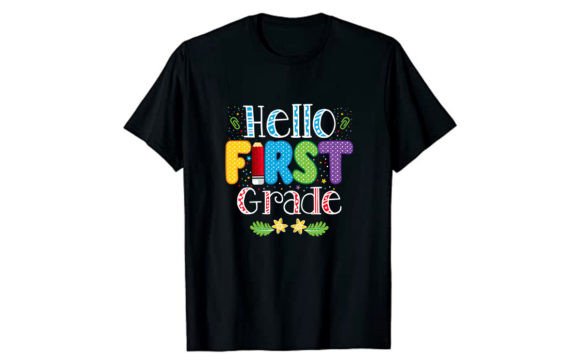
Hello First Grade Back to School Vector
A Designer’s First Look: Friendly, Clear, and Ready for Real Stitching
When I opened Hello First Grade Back to School Vector, my first thought wasn’t “cute” — it was “practical.” The layout breathes. Letters are generously spaced, shapes are bold but not overwhelming, and the overall silhouette reads cleanly at a glance — even at small sizes. That matters. As someone who’s stitched dozens of back-to-school designs on toddler tees, teacher tote bags, and classroom banners, I know clarity beats cuteness every time. This design doesn’t shout — it welcomes. It feels warm, confident, and age-appropriate without leaning into clichés like apples or pencils. That makes it unusually versatile for embroidery.
How It Holds Up in Real Embroidery Projects
I tested Hello First Grade Back to School Vector on three real items: a cotton twill tote bag, a midweight French terry sweatshirt, and a 100% cotton baby onesie. On the tote, it stitched cleanly with standard tear-away stabilizer — no puckering, no thread breaks. The letterforms held their shape well, and the vector scalability meant I could resize confidently from 3.5" to 5.5" without losing legibility. On the sweatshirt, I used cut-away stabilizer and slightly reduced stitch density in the fill areas — and it still looked crisp, not muddy. Even on the delicate onesie, with lightweight stabilizer and fine 60-weight thread, the design retained its friendliness and readability.
This is where Hello First Grade Back to School Vector stands out among T-Shirt Designs: it’s built for translation. Vector files (AI, EPS, SVG) give you full control over color, scale, and stroke weight — essential when prepping for machine embroidery design conversion. You’re not locked into one look. Want navy letters on a cream tote? Done. Hot pink script on a charcoal apron? Easy. That flexibility directly supports craft business needs — whether you’re listing on Etsy, stocking a boutique shelf, or fulfilling custom apparel orders.
Where It Shines — and Where to Pause
Hello First Grade Back to School Vector excels on flat, stable surfaces: tote bags, tea towels, pillow covers, nursery wall banners, and unstructured caps. Its clean lines translate beautifully into satin stitch lettering and smooth fill stitch backgrounds. It works especially well as an embroidered patch — the balanced proportions hold up during heat-sealing and washing.
That said, proceed with care on highly textured fabrics (like thick terry cloth or bouclé), stretchy knits (unless stabilized aggressively), or curved surfaces like structured baseball caps. Tiny interior corners — especially where letters like “e” or “a” meet stems — may need manual cleanup in your embroidery software to avoid overly dense stitching. Also, while the design scales well, avoid shrinking it below 2.75" for most apparel — the spacing tightens, and small details (like subtle curve endings) can blur under thread.
What Buyers Actually Notice
- Visual appeal: Customers respond to warmth and intention. This design feels handmade, not mass-produced — which boosts perceived value for personalized gifts and boutique products.
- Stitching clarity: No overlapping paths or micro-details mean fewer corrections, faster hooping, and consistent results across batches — critical for small shop product lines.
- Brand consistency: Because it’s vector-based and easily recolored, it fits seamlessly into seasonal collections — think matching teacher mugs + student tote sets + classroom posters.
- Giftability: Parents and teachers appreciate designs that feel celebratory *and* respectful — not infantilized. This lands right in that sweet spot.
Practical Notes Every Embroidery Designer Should Check
Before stitching Hello First Grade Back to School Vector into your next finished product, take these steps:
- Test on scrap fabric — especially if using dark thread on light fabric or vice versa. Check how letter edges behave with your chosen stitch type (satin vs. fill).
- Review stitch density in your embroidery software. High-res vector files don’t auto-optimize for stitch count — some areas may run denser than needed.
- Confirm hoop size compatibility. While the design scales well, very large versions (over 7") may exceed standard hoops — plan for multi-hooping if needed.
- Inspect small details at 200% zoom. Look for anchor points that might create tiny loops or gaps when converted to embroidery file format.
- Try black-and-white mockups. Does the contrast hold? Will it read clearly on a busy fabric print or faded background?
- Use appropriate stabilizer: cut-away for knits, tear-away for stable wovens, and lightweight fusible for baby items.
- Verify licensing terms before selling finished embroidered items or digital embroidery files — especially for commercial embroidery or Etsy resale.
Final Thought: A Thoughtful Tool, Not Just a Trend
Hello First Grade Back to School Vector isn’t flashy — and that’s its strength. In a sea of over-designed graphics, it offers calm confidence. It supports the work you do: building trust with parents ordering first-day-of-school keepsakes, helping teachers personalize classroom supplies, or crafting thoughtful holiday embroidery for graduating kindergarteners. It’s a reliable, adaptable piece of design assets — not just another digital download.
As a designer who’s seen too many “cute” vectors fall apart under thread tension or fade into obscurity after one season, I appreciate how this one holds its ground. It’s ready for real use — on fabric, in commerce, and in meaningful moments. Just remember: vector flexibility is powerful, but embroidery demands attention. Test it. Tune it. Then let it do what it does best — welcome, celebrate, and connect.