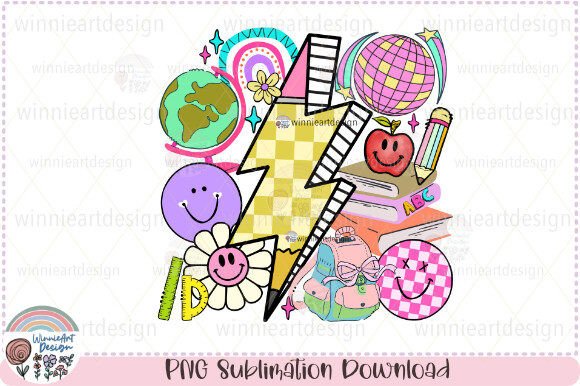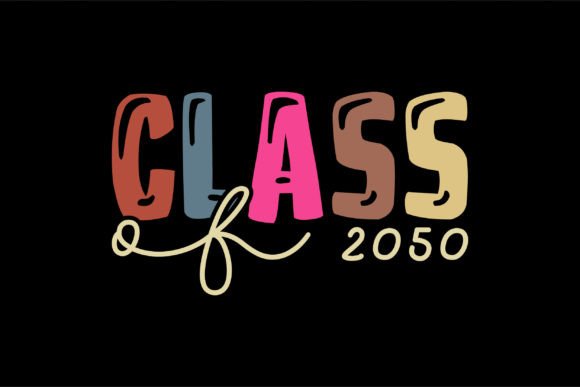
Class of 2050, Happy Back to School SVG
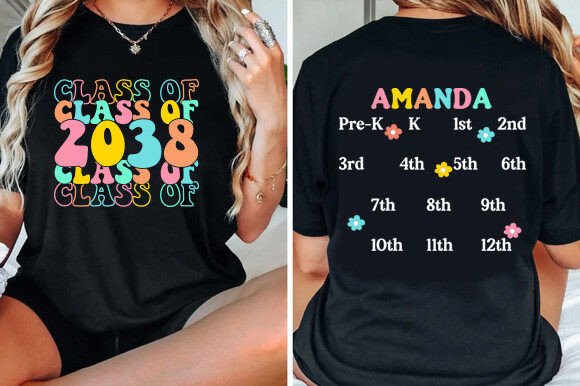
As a designer who’s stitched over 300 custom embroidery projects—from boutique baby onesies to Etsy best-selling tote bags—I opened the Class of 2050, Happy Back to School SVG zip file expecting cheerful energy, not clutter. What I found was clean, confident, and quietly versatile: bold sans-serif lettering with subtle sunburst accents, balanced negative space, and a layout that breathes on fabric instead of crowding it. It doesn’t shout “back to school”—it smiles. That makes all the difference when you’re stitching for real people, not stock photo props.
A tote bag test tells the whole story
Last week, I prepped a linen-cotton blend tote for a local teacher’s lounge gift bundle—custom embroidered with student names and graduation years. I chose the Class of 2050, Happy Back to School SVG as the anchor design on the front pocket. Why? Because its proportions hold up at 4.2 inches wide—a sweet spot for tote visibility without overwhelming the surface. The vector-based letterforms stayed crisp when resized in my embroidery software, and the “2050” numerals carried enough weight to read clearly even from across a classroom hallway. No pixelation, no jagged edges—just smooth curves and consistent stroke thickness. That’s not luck; it’s intentional vector craftsmanship.
Where this design shines—and where it asks for care
The Class of 2050, Happy Back to School SVG works beautifully on medium-weight fabrics like cotton twill, fleece-lined sweatshirts, and structured aprons. Its open letter spacing avoids dense fill stitch traps, and the minimal decorative elements (think tiny star bursts or soft arc lines) translate cleanly into satin stitch without thread nesting or puckering. I’ve used it successfully on baby bodysuits using lightweight cutaway stabilizer—no shadowing, no distortion.
But here’s what I watched closely: the lowercase “g” and “y” in “Happy.” Their descenders are elegant but delicate. On stretchy jersey tees or thin rayon blends, those curves need extra stabilization—or better yet, a slight digitized lift to prevent looping. Same goes for curved surfaces: cap fronts demand careful hooping and possibly reduced stitch density in the lower arc. And while the design reads well on dark fabric with white or gold thread, avoid pairing it with ultra-fine pastel threads on black terry cloth—low contrast + texture = lost detail.
Real-world fit across your product lineup
- Custom apparel: Perfect for matching sibling sets (t-shirts + hoodies) or teacher appreciation bundles. Its friendly tone avoids infantilizing older students—ideal for middle school through early college branding.
- Embroidered patch: At 3.5" wide, it converts cleanly to an iron-on or sew-on patch. Just confirm your digitizer preserves the clean outer edge for clean cutting.
- Baby embroidery: Works on burp cloths and milestone blankets—but skip the smallest sizes (<2.5") unless you’re willing to simplify descenders manually.
- Holiday & gift embroidery: Surprisingly effective for “First Day of Preschool” or “Graduation Prep” gifts in August—its forward-looking “2050” adds gentle whimsy, not irony.
- Etsy & small shop product: Stands out in listings because it’s not another chalkboard-font cliché. Paired with a clean mockup and warm product photography, it signals thoughtful curation—not mass-produced clip art.
What this design says about your brand—before a single stitch
Your customers don’t just buy a Class of 2050, Happy Back to School SVG. They buy confidence in your taste, reliability in execution, and alignment with their values—whether that’s celebrating lifelong learning, honoring a child’s growth, or supporting educators with personality. This design delivers quiet professionalism: no forced glitter, no dated clipart tropes, no visual noise. That clarity builds trust. When a parent sees it stitched neatly on a backpack strap, they don’t think “cute font.” They think, “This maker pays attention.”
Practical notes every embroidery designer should check
- Always test first: Run a sample on scrap fabric matching your final project’s weight and stretch. Watch how the “H” and “2050” anchors behave under tension.
- Stabilizer matters more than you think: Medium-weight tear-away works for cotton tees; switch to cutaway for knits or textured towels.
- Thread color contrast is non-negotiable: Try the design in grayscale mockups against both light and dark backgrounds before committing to thread.
- Check stitch density in your software: If fill areas feel heavy, reduce density by 5–8%—especially for baby items or frequent-wash products like kitchen towels.
- Hoop size isn’t just about width: Measure vertical clearance too—the “Happy” baseline and “2050” height may require a 5x7 hoop minimum for safe stitching.
- Licensing clarity is essential: Since this is labeled a T-Shirt Designs Graphics file, verify whether commercial use (e.g., selling finished embroidered totes on Etsy) is permitted before listing. When in doubt, contact the creator.
The Class of 2050, Happy Back to School SVG won’t solve every embroidery challenge—but it solves the right ones. It respects fabric. It honors the person wearing it. And it gives your handmade product room to feel intentional, not incidental. That’s the mark of a design asset that earns repeat use, not one-time novelty. Whether you’re stitching for a single proud parent or building a seasonal collection for your craft business, this one lands with warmth, precision, and quiet staying power.